A Performing Website: Social Media's Role
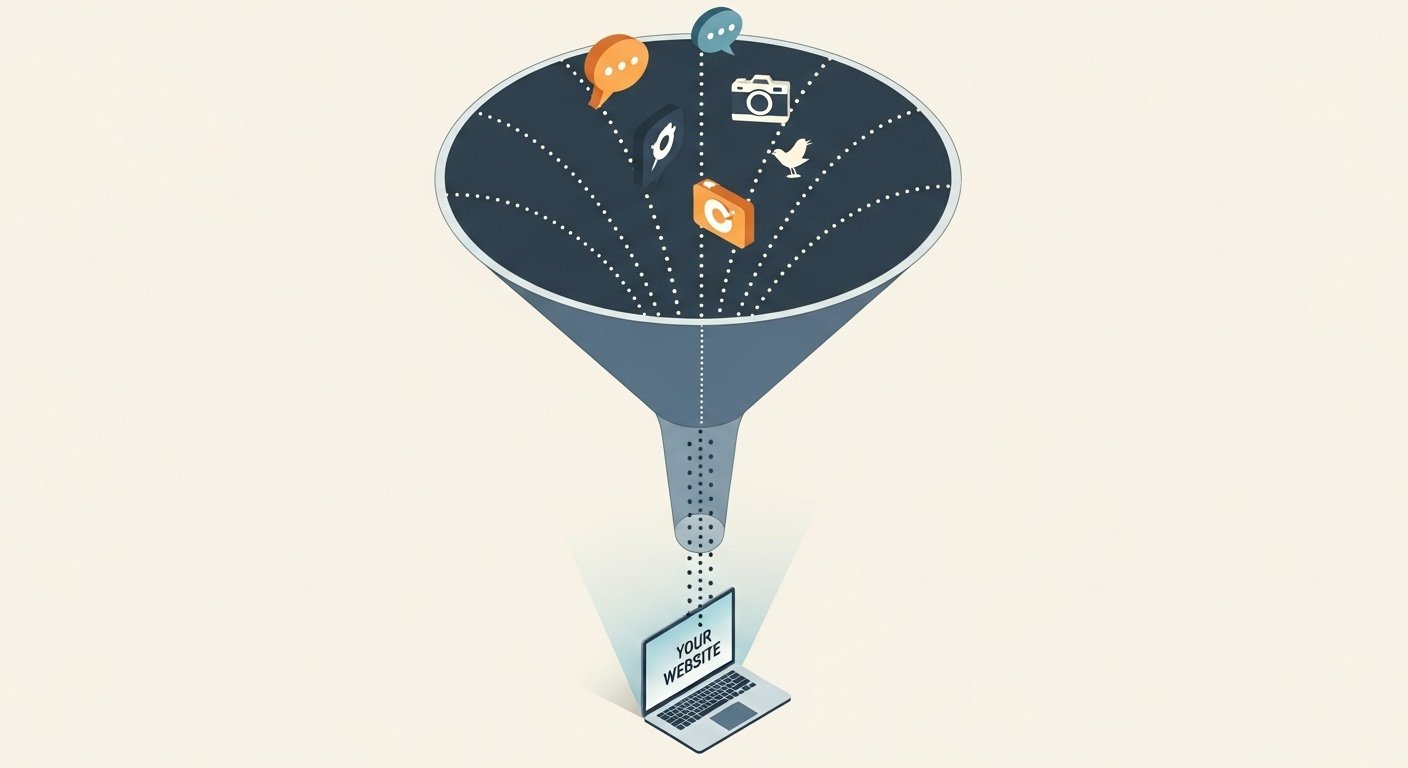
Social media and your website are not competing for your attention — they're meant to work together. Understanding the relationship between them helps you use both more effectively.
Social Media Drives Traffic to Your Site
Every post, every article, every resource you share on social media is an opportunity to send people back to your website. Share your blog posts. Link to your services page when relevant. Share client testimonials with a link to your portfolio. Social media is the top of the funnel — your website is where the real work happens.
Social Proof Builds Website Credibility
When a potential client finds you on social media and then visits your website, their social media impression informs how they read your site. A professional, active social presence makes everything on your website more credible. An empty or outdated social profile does the opposite.
What Social Media Won't Do
Social media is not a replacement for a website. You don't own your social following — platform algorithms, policy changes, or account issues can cut off your access overnight. Your website is owned media. Your email list is owned media. Social is rented land. Use it, but don't build your entire business on it.
Which Platforms to Focus On
You don't need to be everywhere. Choose one or two platforms where your ideal clients actually spend time and show up there consistently. For most creative solopreneurs and B2B service providers, LinkedIn is the highest-return platform for professional content. For visual businesses (designers, photographers, makers), Instagram makes sense. Choose based on where your clients are, not where you feel most comfortable.
Consistency Beats Volume
Posting three times a week consistently is better than posting daily for a month and then going quiet. Your audience (and the algorithm) rewards consistency. Set a realistic cadence you can sustain — one post per week on LinkedIn is respectable and manageable for most solopreneurs.