Four Steps to a Performing Website
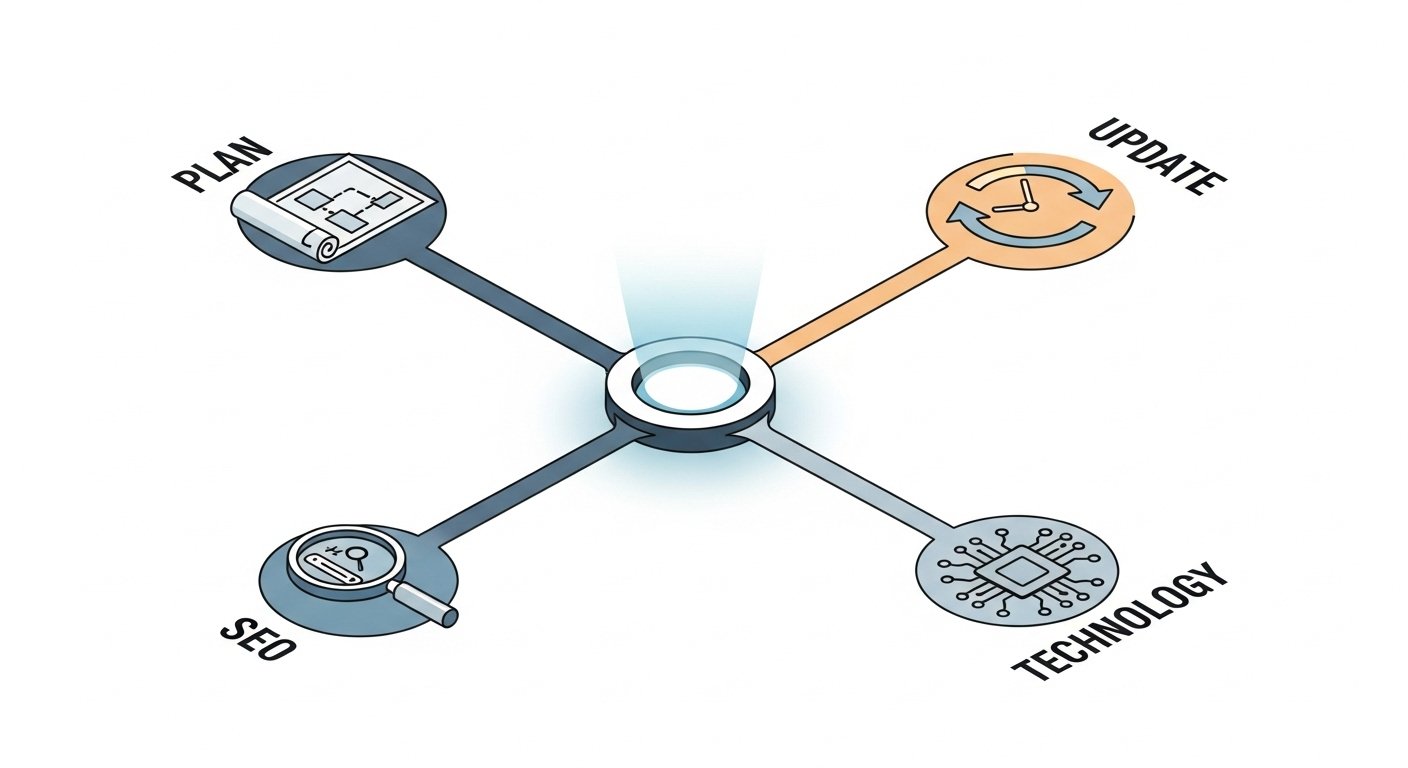
Too often we think once we have a website, we're done. That's far from the truth. Yes, having a website is a great start — but it's a start. To get a performing website, it needs to be part of an overall marketing plan, receive consistent updates, be optimized for search engines, and use up-to-date technology. None of these are one-time events. They are ongoing.
Part of an Overall Marketing Plan
Your website is just one aspect of an overall marketing plan. A few ways to integrate it:
- Include your website address on business cards, invoices, and email signatures
- Drive traffic through social media
- Add engagement elements like polls, surveys, or contests
- Include a blog for regular fresh content
Consistent Updates
Search engines eventually ignore static sites. Dynamic, current websites attract search engine attention. Put a plan in place to update your site regularly — whether that's posting events, news, project highlights, or monthly content. The frequency matters less than the consistency.
Search Engine Optimization (SEO)
SEO has become a science of its own, and companies specialize in it. The first two steps above — marketing integration and consistent updates — directly help SEO. But there's more: inbound links, relevant content, keyword placement, and page descriptions all contribute to a strong SEO foundation. See the SEO section for a full breakdown of each.
Up-to-Date Technology
Technology changes fast, and websites are no exception. The practical lifespan of a website is 3–5 years before it begins to look and function stale. There will be better ways to build, update, and present your site. Keep it current — not just visually, but structurally. A site that can't function properly on mobile or loads slowly is already behind.